
Buying
First-Time Home Buyer Guide for the NC Triad
A first-time home buyer guide for Thomasville, Lexington, and the NC Triad: saving, loan types, pre-approval, down payment help, and the NC buying steps.
Read the articleDAVIDSON COUNTY
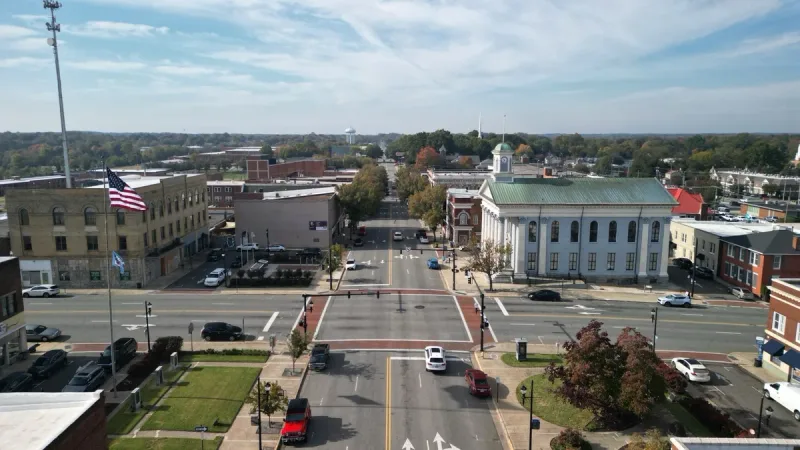
Lexington real estate includes Uptown streets, established neighborhoods, newer subdivisions, lake-area homes, farms, and rural acreage. Start with the exact address because city limits, utilities, schools, and daily routes can change quickly.
Locate the area, then open Google Maps to compare routes from the homes you’re considering.
Loading the map connects to Google. Privacy details
A Lexington mailing address identifies the post office that serves the property; it does not guarantee that the home is inside the City of Lexington. The address may be in the city, just outside it, or well into rural Davidson County. That difference can affect taxes, water and sewer, trash service, police or sheriff coverage, school assignment, and what uses are allowed. Pull up the parcel in county records and confirm the jurisdiction before comparing costs. Two homes with Lexington addresses and similar prices may have very different utility systems, lot obligations, commute patterns, and renovation options. The property record and service providers give you a more useful answer than the city name in the listing.
Uptown and central Lexington offer older homes, established streets, local restaurants, civic buildings, and shorter trips to the city center. Areas near the interstate and major roads can simplify regional travel and shopping. North toward Welcome and Winston-Salem, west toward Tyro and Reeds, and east or south toward High Rock Lake and rural Davidson County, the setting can change to subdivisions, larger lots, farms, wooded acreage, and private utility systems. Rather than asking for the “best” area, compare a few real addresses for the life you want: commute, yard work, storage, nearby services, road noise, internet, and the amount of house or land you are prepared to maintain.
Interstate 85 is the main route toward Salisbury, Charlotte, Thomasville, High Point, and Greensboro. US 52 connects Lexington with Winston-Salem to the north and areas toward Albemarle to the south. US 64 carries traffic east and west, while Cotton Grove Road, Hargrave Road, Main Street, Center Street, and NC 8 are important local connectors. Access to a major highway can make a regional commute easier, but the last few miles from the driveway still matter. Test the route at your normal travel time, notice school traffic and railroad crossings, and consider whether a narrow or busy road affects pulling a trailer, reaching an outbuilding, or entering and leaving the property safely.
Homes inside the City of Lexington may have municipal water, sewer, electric, trash, or other city services, while rural properties may use a well, septic system, propane, private trash pickup, or a different electric provider. Never assume the setup from the mailing address or the neighboring house. Confirm each service for the parcel and request the seller’s recent utility information when it helps. For well and septic, locate the systems, obtain available permits, and use qualified inspections. If you plan a pool, shop, addition, extra bedroom, or accessory dwelling, check the septic capacity, setbacks, easements, zoning, and utility locations before treating the idea as part of the property’s value.
Lexington City Schools and Davidson County Schools serve different properties with Lexington addresses. School assignments depend on the actual location and current boundaries, so verify them with the appropriate system instead of relying on a listing, map pin, or nearby address. Davidson-Davie Community College’s Davidson Campus in Thomasville is also within a practical drive for many Lexington residents and provides college transfer, technical, workforce, and continuing education options. When comparing homes, use school information as an address-specific fact to verify. Avoid assuming that a postal city, subdivision name, or county tax record automatically identifies the assigned school.
Uptown Lexington is known for local restaurants, shops, government offices, and community events around the historic center. Lexington’s barbecue identity is visible throughout the city, but daily life also depends on practical destinations such as grocery stores, medical care, parks, and the route to work. High Rock Lake is an important regional feature southeast of the city, and lake-area properties require their own review of access, flood information, shoreline rules, septic, docks, and insurance. Lake Thom-A-Lex, between Lexington and Thomasville, is another familiar local landmark. Visit the places you expect to use and drive back to the property rather than judging convenience from a general city map.
Central Lexington includes homes from many eras, so an inspection may need to focus on foundations, crawl-space moisture, drainage, wiring, plumbing, roofs, chimneys, HVAC, windows, and additions or conversions. Subdivisions may offer newer construction and easier maintenance, but buyers should read restrictions and homeowners association documents where they apply. Rural homes and log homes can bring acreage, privacy, shops, barns, long driveways, and wooded land along with additional maintenance. Confirm legal access, boundaries, easements, outbuilding permits, and the condition of private systems. For new construction, compare the written specifications, allowance amounts, lot grading, warranties, and the total price after options.
A strong Lexington listing explains what the property actually offers: city convenience, a manageable subdivision lot, rural privacy, lake access, acreage, an outbuilding, or room for a specific use that has been verified. Gather surveys, permits, septic records, repair receipts, warranties, utility details, and information about additions before the home goes live. Use comparable sales that match location, jurisdiction, condition, lot type, and service setup. Days on market matter alongside sale price because they can reveal whether buyers resisted the price, condition, layout, location, or marketing. If the property is unusual, build the pricing range from several relevant comparisons and explain the adjustments instead of forcing one nearby sale to carry the entire opinion.
Use these official starting points, then confirm details for the property’s exact address.
I help buyers compare homes and daily routes, and help sellers review preparation, pricing and estimated proceeds. Tell me what you’re considering and we’ll talk through your next step.
Talk with Toby about LexingtonGO A LITTLE DEEPER
Buying
A first-time home buyer guide for Thomasville, Lexington, and the NC Triad: saving, loan types, pre-approval, down payment help, and the NC buying steps.
Read the articleMoving
Moving to the Triad NC? A month-by-month relocation checklist for Davidson County and beyond: picking a town, budget, touring, logistics, and NC buying rules.
Read the articleBuying
A plain-English guide to how much house you can afford in Davidson County NC: approval vs comfort, the 28/36 rule, property taxes, and costs buyers forget.
Read the articleBuying
Thinking about USDA loans in Davidson County NC? Learn how address eligibility, income limits, and property condition work for Welcome, Wallburg, and rural homes.
Read the articleBuying
Buying a home in North Carolina? Review financing, representation, records, inspections, and contract costs before making an offer on a Triad NC property.
Read the articleBuying
Understand North Carolina due diligence fee questions before making a Triad NC offer. Review payment, risk, deadlines, and the terms of your actual contract.
Read the articleSelling
Should you fix up your Triad NC house before selling? Compare repair costs, timing, buyer concerns, and likely net proceeds before choosing which work to do.
Read the articleMoving
Moving to Lexington, NC? Get a local buyer’s guide to commute times, neighborhoods, groceries, barbecue, High Rock Lake, day trips, and home-buying checks.
Read the guideBuying
Considering new construction near Lexington NC? Review specifications, lot details, incentives, inspections, warranties, and total cost before signing.
Read the articleSelling
Price your Triad NC home using relevant current comparisons, condition, competition, and estimated net proceeds. Build a clear selling plan with Toby Russell.
Read the articleSelling
Selling an inherited house in Davidson County NC? Start with authority and title, then compare cleanout, repairs, sale options, costs, and a realistic timeline.
Read the articleComparisons
Thomasville vs Lexington NC: compare property taxes, commuting, utilities, and home-buying tradeoffs with REALTOR® Toby Russell in Davidson County.
Read the articleMoving
Build a commute map before buying in the Triad NC. Compare actual addresses, repeated destinations, travel times to verify, and the tradeoffs of your routine.
Read the articleA FEW MORE ANSWERS
Compare actual Lexington addresses against the same destinations, property needs, verified services, and ownership budget.
Use the applicable county and municipal records, direct provider confirmation, and qualified professionals for legal, boundary, condition, or system questions.
LET’S TALK IT THROUGH
Bring the question. We’ll work out the next step.
CLIENT EXPERIENCES
Selected excerpts from Google reviews.
★★★★★
“Toby was great to work with.”
★★★★★
“Toby makes it happen!”
★★★★★
“Toby is a super nice guy and he is also very knowledgeable, 10/10 would recommend!!”
★★★★★
“Toby Russell and his team did a great job as sellers agent for my property.”
★★★★★
“Toby did an amazing job.”
★★★★★
★★★★★
“I looked for property for a couple of years and Toby was a great help in the process.”
★★★★★
“Great realtor. He made listing and selling so easy.”
★★★★★
“Toby was the best when it came to helping us with our house purchase.”
★★★★★
“Toby Russell is an amazing and patient Realtor.”